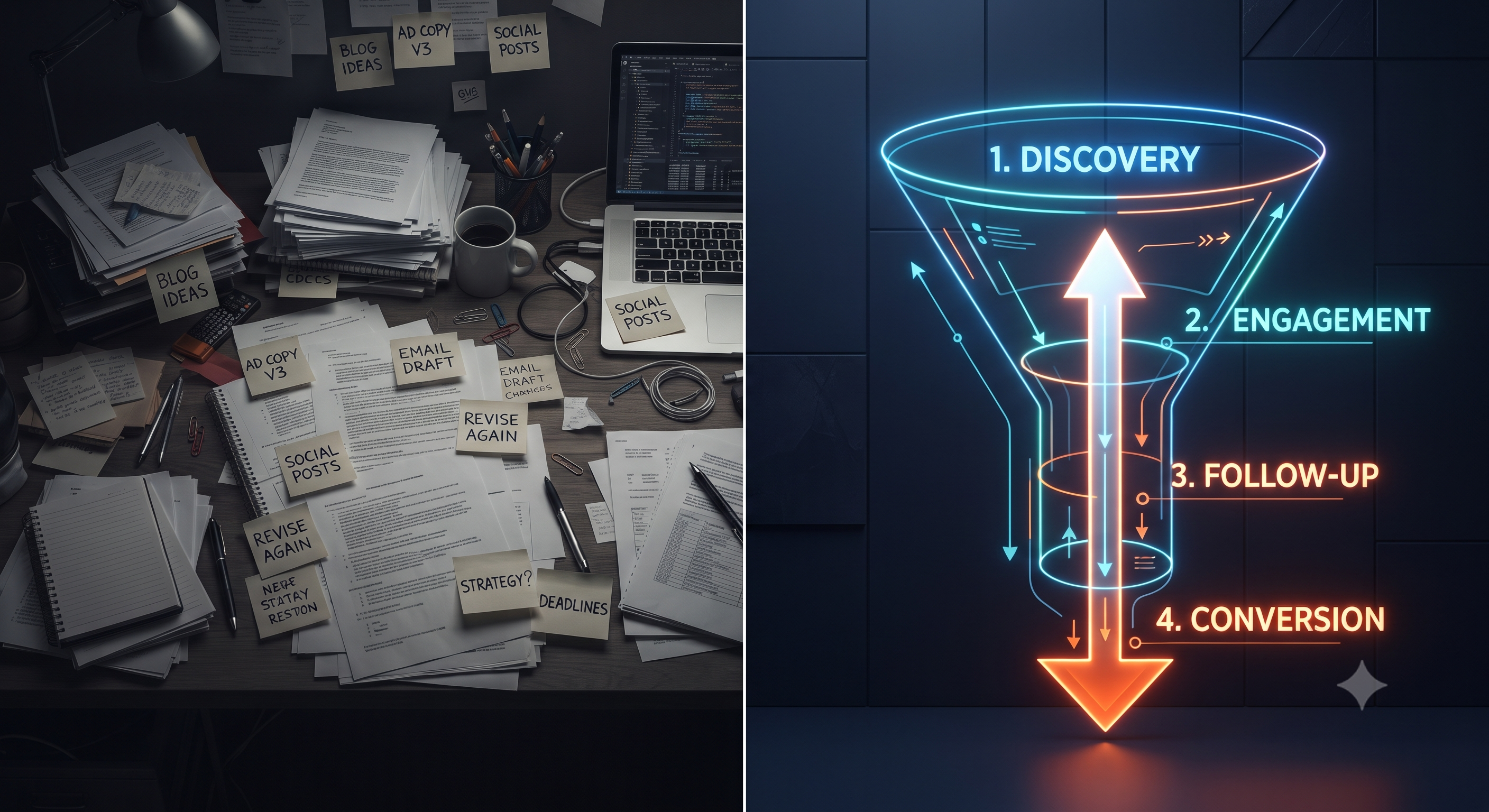
95% of B2B marketers are using AI right now. Only about 40% of them can say it's actually improving performance. That gap should scare you more than it does - and it isn't an AI problem. It's a targeting problem.
- 95% of B2B marketers use AI today, but only ~40% report it's actually improving performance - and AI tools still top where marketers plan to increase 2026 spend, at 45%.
- Most teams pointed AI at content volume - more posts, more ad variants, more emails - but volume was never the real constraint. Distribution and follow-through were.
- Where AI is provably paying off: Salesforce found AI-assisted SDR workflows cut cost-per-lead by 38% and booked more meetings per rep, by handling the follow-up nobody had time for.
- On the discovery side, Adobe tracked a 98.3% year-over-year surge in AI-referred retail traffic on Prime Day 2026, converting 50.7% better than every other channel combined.
- The fix isn't more AI. It's redirecting the AI you already have toward the parts of the funnel that were actually broken - follow-up, distribution, and discovery - instead of measuring success in output volume.
The number that should worry you
Adoption isn't the problem anymore. Nearly every B2B marketing team has AI in its stack - 95% of B2B marketers report using it in some form. The problem is that adoption and results have come apart. Only around 40% of those same marketers say AI is actually improving their performance.
That's not a rounding error. That's the majority of B2B marketing teams running AI in production and unable to point to a performance gain from it. And it hasn't slowed the spending. When the Content Marketing Institute asked marketers where they're increasing spend in 2026, AI tools topped the list at 45%, ahead of events and experiential. Budget keeps flowing toward a category that, by the industry's own admission, isn't moving the needle for most people who use it.
Why adoption never turned into performance
Here's why. Most teams pointed AI at the wrong problem. They used it to make more - more blog posts, more variations of ad copy, more emails. Volume was never the constraint for most B2B marketing organizations. Distribution and follow-through were. Adding a faster content engine to a funnel that was already leaking at the follow-up stage doesn't fix the leak - it just fills the top of the funnel faster while the same percentage falls through the same cracks.
Content generation was never the unlock. It was the easiest place to point a new tool, so that's where the budget went first - new tool, obvious use case, quick pilot, quick case study. Meanwhile, the actual leverage - in follow-up, in discovery, in the moments between awareness and purchase - sat mostly untouched.
Where AI is actually paying off
Look at where the ROI is real and measured, and a pattern shows up fast: it's almost never in content production.
- Sales follow-up. Salesforce's 2026 State of Marketing found that B2B teams running AI-assisted SDR workflows saw a 38% drop in cost-per-lead and booked more meetings per rep. Not because the AI wrote better outreach - because it handled the follow-up nobody had time for. Every lead that used to go cold while a rep worked a different account now gets a next touch.
- Discovery and decision. Adobe tracked a 98.3% year-over-year surge in AI-referred retail traffic on Prime Day 2026, and that traffic converted 50.7% better than every other channel combined. That's not content marketing working harder. That's AI changing how people discover and decide, and brands that showed up in that discovery layer got paid for it.
Neither of these wins came from generating more assets. They came from AI closing a gap in follow-through - the rep who couldn't get to lead 40, the buyer researching a category who never saw your brand in the answer they got back.
How to redirect an AI strategy that's stuck on output volume
If your team's AI metrics are still "posts published" or "variants generated," here's the redirect:
- Find the actual leak, not the easiest target. Map your funnel and find where leads or buyers actually drop - cold follow-up, slow response times, invisibility in AI-driven search and discovery - before deciding where AI goes next.
- Point AI at follow-through, not first drafts. The SDR data is the model: use AI to make sure every lead gets a next touch, every inquiry gets a timely response, every account gets tracked - the volume of work humans were never going to keep up with.
- Show up in the discovery layer. Buyers are increasingly asking AI tools and answer engines to shortlist vendors before they ever hit a search results page. If your content and structured data aren't built to be cited there, you're invisible at the moment decisions get made - regardless of how much content you publish.
- Measure against the bottleneck, not the tool. Don't track "AI usage." Track whether the specific broken step - cost-per-lead, response time, discovery-driven conversion - actually moved. If it didn't, the tool isn't the issue; the target is.
The right question for 2026
The teams still asking whether AI works are asking the wrong question. The right one is where they pointed it. If your AI strategy is measured in output volume, you're running adoption theater, not a strategy. Redirect it to the parts of the funnel that were actually broken, and the ROI numbers stop being a mystery.
FAQ
Why do 95% of B2B marketers use AI but only 40% see performance gains?
Most teams pointed AI at content volume - more blog posts, more ad variations, more emails - when volume was never the bottleneck. Distribution and follow-through were. Teams that redirected AI toward those broken parts of the funnel are the ones showing up in the 40% who see real performance gains.
Where is B2B AI adoption actually working in 2026?
It's working in the moments teams don't have time for: AI-assisted SDR follow-up and AI-driven product discovery. Salesforce's 2026 State of Marketing found AI-assisted SDR workflows cut cost-per-lead by 38% and increased meetings booked per rep. Adobe found AI-referred retail traffic on Prime Day 2026 was up 98.3% year-over-year and converted 50.7% better than every other channel combined.
Is content generation a good use of B2B AI budget?
It's the easiest place to point a new tool, which is why most budget went there first - but it's rarely where the leverage is. Content generation was never the bottleneck for most B2B teams. Follow-up, distribution, and discovery were, and those are where AI is paying off in 2026 data.
Where should B2B marketers increase AI spend in 2026?
CMI's 2026 research found AI tools top the list of where B2B marketers are increasing spend, at 45%, ahead of events and experiential. That spend pays off when it's directed at SDR and sales follow-up, and at the AI-driven discovery layer where buyers now find and evaluate vendors - not at producing more of the same content faster.
How do I know if my company's AI strategy is "adoption theater"?
If your team measures AI success in output volume - posts published, variants generated, emails drafted - instead of pipeline or conversion metrics tied to a previously broken step in the funnel, that's adoption theater. A real AI strategy targets a specific bottleneck (usually follow-up, distribution, or discovery) and measures whether that bottleneck actually closed.
If you're rethinking where your AI budget is actually pointed, I'd be glad to compare notes.